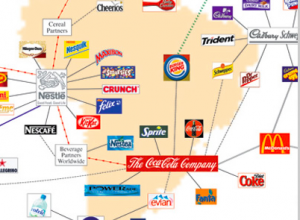
 I chose this visualization mainly because it created an interesting visual of company connections that exists together in the market with products such as designer clothing, candy, and soft drinks. Although they are similar in the webbing design, there purpose differs as the first visualization has a more complex understanding. It shows ‘who owns what’ throughout various corporations across the world. This graph is a good example of dynamic visualization as it is effectively follows it’s purpose without misleading the viewer to another conclusion. The only downside that I can see from the first graph is that the world map in the background has no purpose. The graph doesn’t represent any company’s geographic locationwhich the average viewer would assume when they see a map.
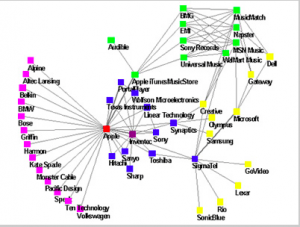 The second visualization is very simple and lacks vibrance as it appears very dull. However, this plain style illustrates an effective way of showing the branch offs connected to Apple. It also shows the evolution of Apple’s iPod “ecosystem” of music and sounds that have become a household name throughout society. Almost all of my electronics have came from Apple and I love their products which made this interesting for me to view. The visualization is clear and concise which i enjoyed, being that I could understand it’s purpose easily.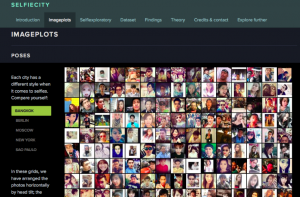
SelfieCity has always been one of my favorite visualizations due to it’s creative datasets that represent social networks most popular photo style. The software can take a simple self-portrait from popular cities such as New York, Moscow, Berlin, etc. and compile data to recognize trends and similarities within the people in those cities. You can use the site in a variety of ways as its viewer interactive system can be molded into a customized research. Overall, it’s a great tool to see how people are operating throughout daily life while also recognizing tendencies and trends. These visualizations help understand the websites purpose for creating a unique way of analyzing images.
